Bacco’s Wine Club September 2026
Loire, Loir, and the Long Way Around
Here's something I notice every year: the light changes before the temperature does. Sometime in early September the late-afternoon sun starts coming in lower across St. James Ave, and people walk in asking for "something for fall" while it's still eighty degrees out. They're not wrong. They're just early.
My answer is almost always the same two grapes: Chenin Blanc and Cabernet Franc. The Loire built its identity on them, and they track the season better than anything else I know. Honeyed and mineral one week, structured and cool the next. This month is three bottles from that valley, made by three people who got there by very different roads.
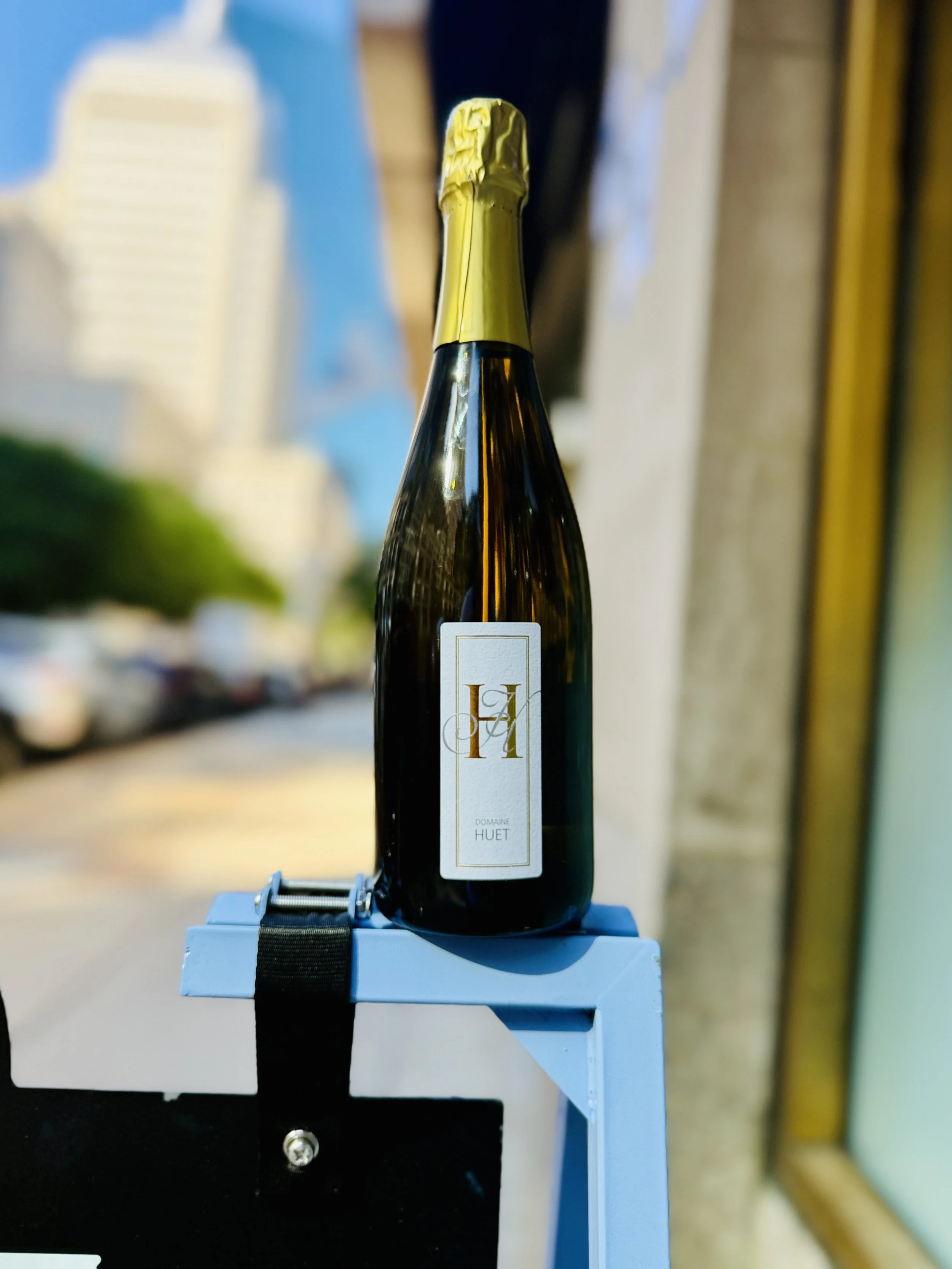
Pictured: Domaine Huet Pétillant Vouvray 2019
Domaine Huet Pétillant Vouvray 2019
You'll hear that Huet has been the reference point for serious Chenin since 1928. You'll hear it so often it stops meaning anything, so start with the person instead. Victor Huet was running a bistro in Paris when he came home from the war in bad health and moved to Vouvray, where he bought a single vineyard, Le Haut-Lieu. His son Gaston worked alongside him from the beginning and spent the next half-century making the name.
The part I find more interesting comes later. Gaston's son-in-law, Noël Pinguet, was living in Paris too until Gaston talked him into coming back. In the late 1980s Pinguet heard a grower named François Bouchet make the case for biodynamics at a conference. He tried it on the 1988 vintage, liked what he saw, and had every vineyard converted by 1990. That was decades before it became a selling point. When Gaston died in 2002, the estate had to be sold to cover the inheritance taxes. The Hwang family bought it, and the people who made the wine stayed. The name on the deed changed; the cellar team and the approach didn't.
The Pétillant draws on all three of the estate's great vineyards plus a few smaller parcels, and it spends years in the tuffeau cellars before release. Nobody there is in a hurry. What comes out is baked apple, chalk, and a mousse softer than you'd expect if Champagne is your reference point. Open it while it's still warm enough to sit outside.
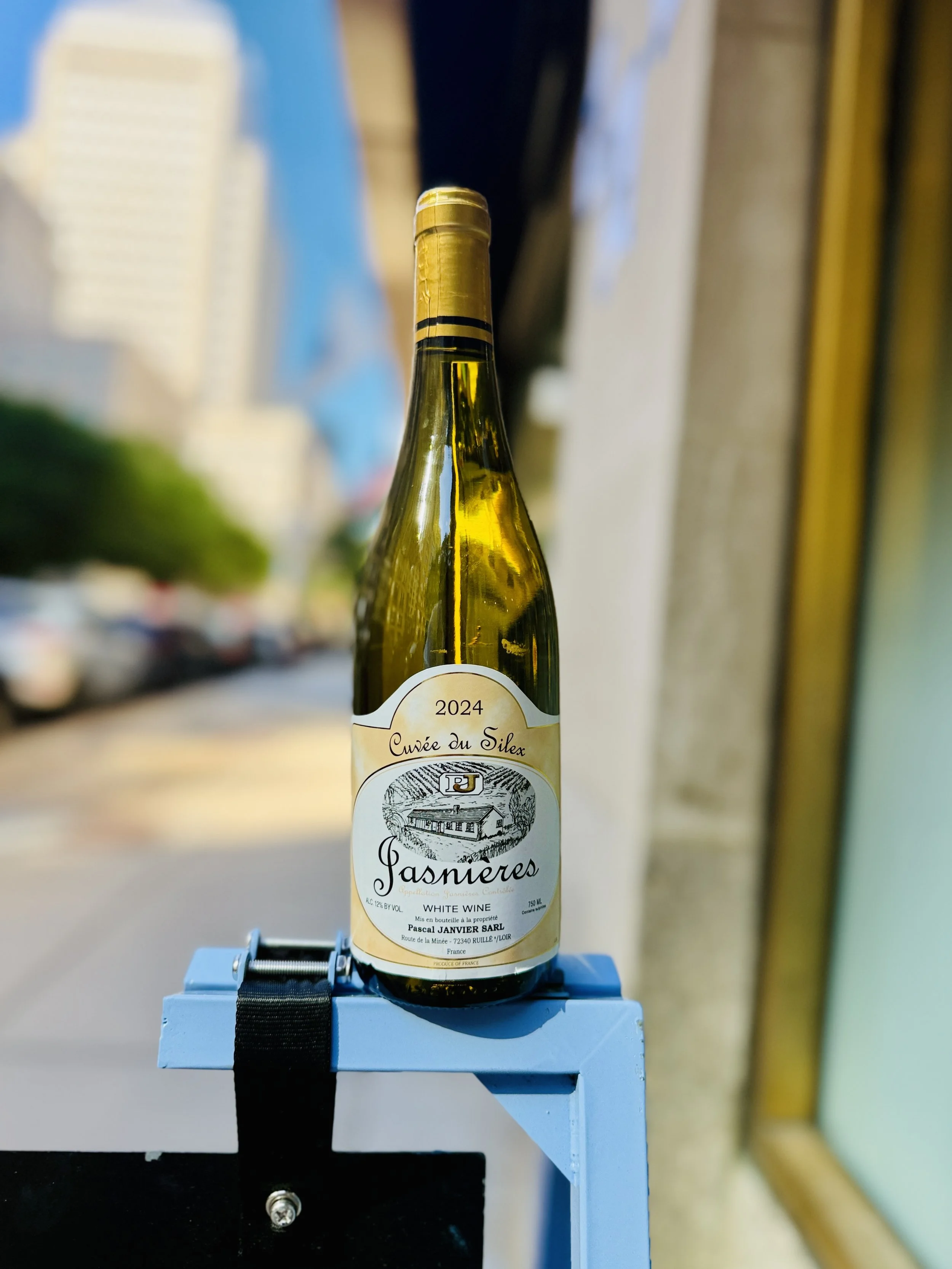
Pictured: Pascal Janvier, Jasnières "Cuvée du Silex" 2024
Pascal Janvier, Jasnières "Cuvée du Silex" 2024
Most people who know the Loire couldn't find Jasnières on a map, partly because it isn't on the Loire. It sits north of Tours on the Loir, no "e," a tributary with the coldest vineyards in the whole greater Loire region. Henri IV reportedly preferred these wines. Today the appellation is down to fewer than a hundred hectares and was close to disappearing entirely.
Pascal Janvier grew up surrounded by vines. His parents owned vineyard land but never made wine themselves, and he went to school to become a butcher. At thirty he changed course, enrolled in the viticulture school in Amboise, and started over. The people who know him describe a quiet, deliberate man, and the way he farms bears that out. He and his wife Dominique rent sixty-six separate parcels adding up to about nine hectares and work every one of them themselves. That's sixty-six sets of rows, slopes, and soil to learn, in a place where getting grapes ripe at all is a fight most years.
The Silex is named for the flint in those slopes, and you taste it first: wet stone and smoke, then guava and quince once the mineral has made its case. It's off-dry, closer to Vouvray than most Loire whites, but the finish runs colder and the acidity never lets the honey go soft. It tastes like the work of someone who chose this rather than inherited it.
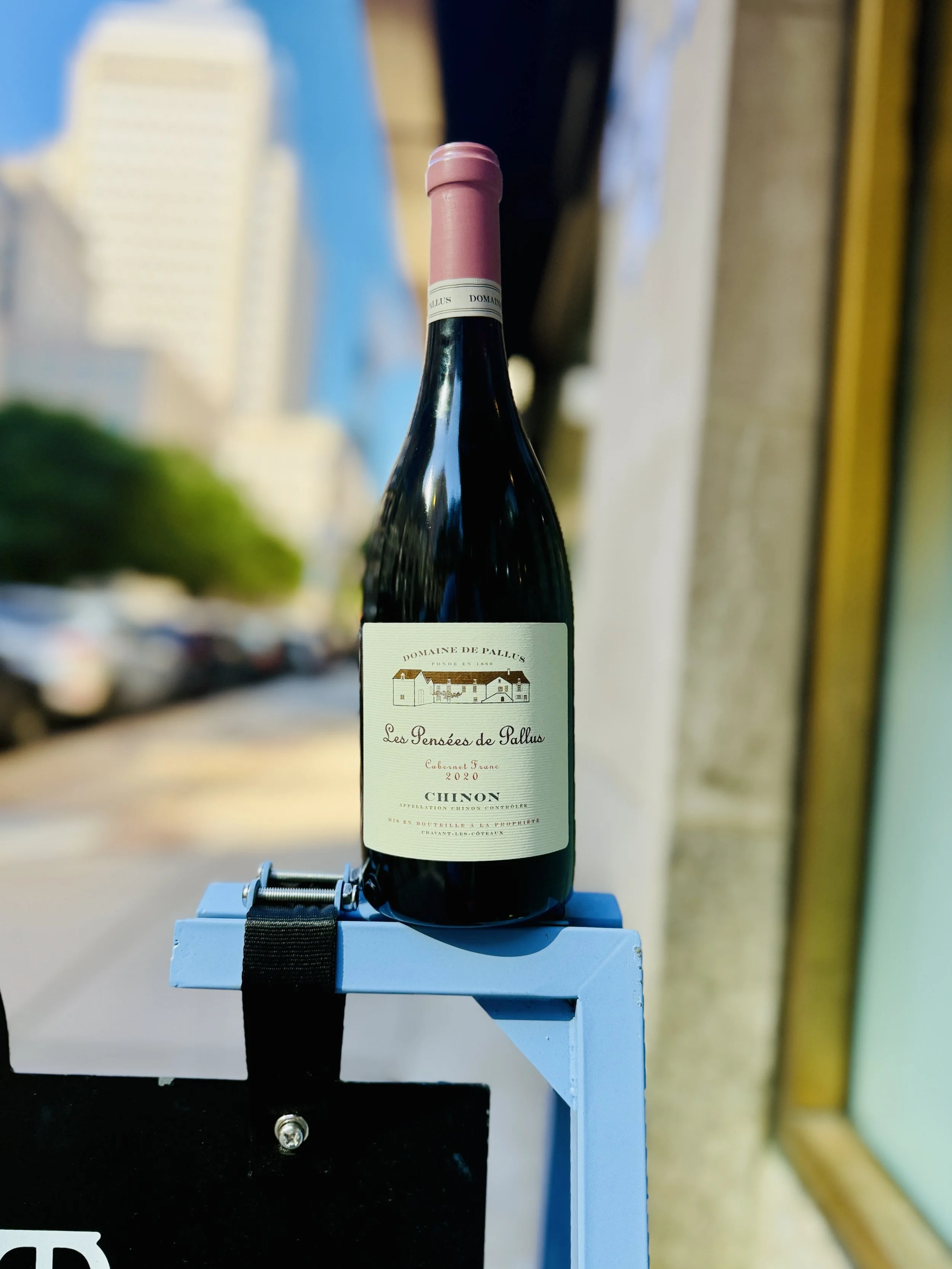
Pictured: Domaine de Pallus, "Les Pensées de Pallus" Chinon 2020
Domaine de Pallus, "Les Pensées de Pallus" Chinon 2020
Bertrand Sourdais grew up at Pallus, and then he left. He studied enology in Bordeaux and apprenticed at Mouton-Rothschild, at Santa Rita in Chile, and under Álvaro Palacios in Priorat. In 1999 he landed at Dominio de Atauta in Ribera del Duero, a winery with neglected, ungrafted old vines and his first job as head winemaker. It went well. His importers tell it this way: in a 2004 blind tasting run by France's Michel Bettane and Spain's José Peñín, his 2002 Atauta tied 1994 Vega Sicilia for Bettane's top red. Sourdais was twenty-five.
He could have stayed. He didn't. With his father nearing retirement, he came home to Cravant-les-Coteaux as the fifth generation on the estate. He brought back the habit Atauta had taught him, which was to question every step instead of doing it the way it had always been done. He cut yields, moved the vineyards toward biodynamics, and stretched macerations to a month or longer, well past what most Chinon gets. In 2013 he rebuilt Les Pensées entirely. What had been a blend of parcels became a single mid-slope terrace of sand and iron-rich gravel over limestone. He isn't the only one who came back, either. His brother Martin and sister-in-law Pauline left the bakery trade to return to Pallus.
The wine is still unmistakably Chinon: cassis, gravel, tree bark. There's just more frame underneath than the appellation usually shows this young. Grill something and open it now, or put it away for five years and see what the tannins do.
The Last Drop
Three producers, three relationships to home. Huet stayed put, even when the ownership didn't. Janvier stayed too, but came to the vines from another trade entirely. Sourdais left and came back different.
September does something similar: familiar, and not quite how you remember it.