
Bacco’s Wine Club April 2026
Back from the Brink:
Three Greek Grapes Rescued from Oblivion
The story of Greek wine in the twentieth century is mostly a story of forgetting. The industrial era arrived, and with it came pressure to plant varieties that yielded more, ripened faster, sold easier. The old grapes — the ones with names that didn't appear in any French textbook, the ones that had been growing on the same hillsides since antiquity — got pulled out. By the 1970s, a significant portion of Greece's indigenous viticultural heritage existed only in the memories of old farmers, or in a few neglected rows at the edges of vineyards that no one had gotten around to clearing yet.
This month's wine club is about three of those grapes. Not in a sentimental way. They're not in your bag because they survived — they're in your bag because, having survived, they turned out to be genuinely interesting.
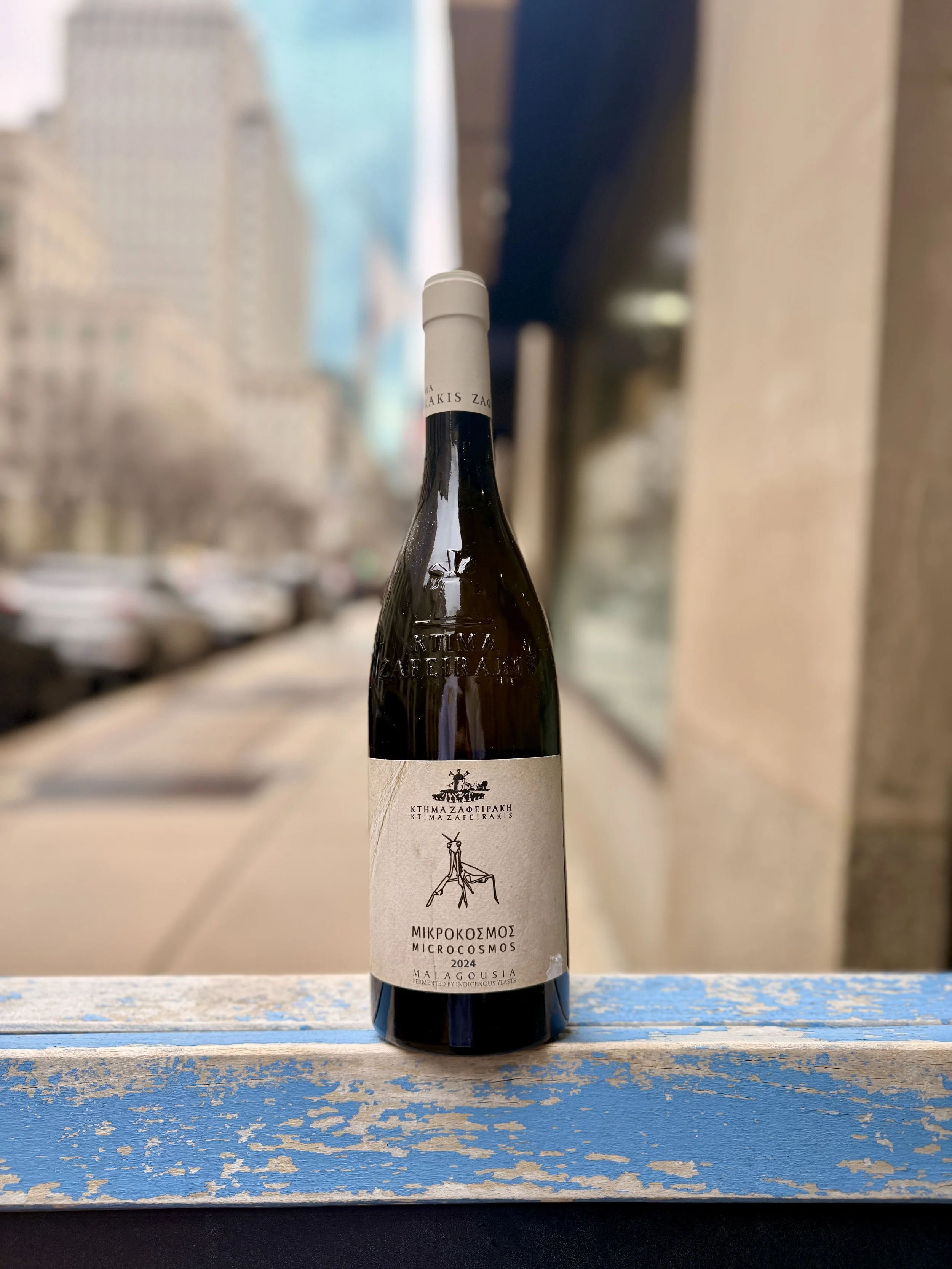
Zafeirakis Malagousia "Microcosmos" 2024 — Thessaly, Greece
Malagousia almost didn't make it. By the 1970s, it had been effectively abandoned across Greece, surviving only in a handful of old plots, its identity uncertain, its future nonexistent. A professor at the University of Thessaloniki named Vassilis Logothetis found some. He passed cuttings to a young student named Evangelos Gerovassiliou, who planted them at his estate in the Halkidiki Peninsula and, over the next two decades, quietly proved that this forgotten white grape could produce some of the most aromatic, distinctive wine in the country.
Today Malagousia is planted on roughly 7,500 acres across Greece. That's the full arc of rescue: near extinction to widespread cultivation in the span of forty years. The comeback story has been told.
What hasn't changed is how Malagousia smells. It's expressive in the way that Viognier or Gewürztraminer are expressive — orchard blossom, stone fruit, a floral quality that announces itself — but this bottling from Christos Zafeirakis is more restrained than those comparisons imply.
The Microcosmos comes from a single vineyard called Palaiomylos, "the old mill," on the slopes of Mount Olympus in Tyrnavos. The vines are approaching twenty years old. The soils are clay with a high flint concentration. It's certified organic, harvested in three passes, fermented with native yeasts, and bottled with minimal sulfur. The result is a wine with Malagousia's characteristic aromatics reined in by a cooler site — white peach, citrus blossom, a saline mineral thread, nothing blowsy about it.
Zafeirakis himself is worth knowing. He's a third-generation winemaker from Tyrnavos working on land his grandfather farmed, and his focus on the indigenous Thessalian varieties — Malagousia and Limniona — has made him one of the more closely watched producers in contemporary Greek wine.
Pictured: Fattoria Moretto Lambrusco Grasparossa di Castelvetro Secco
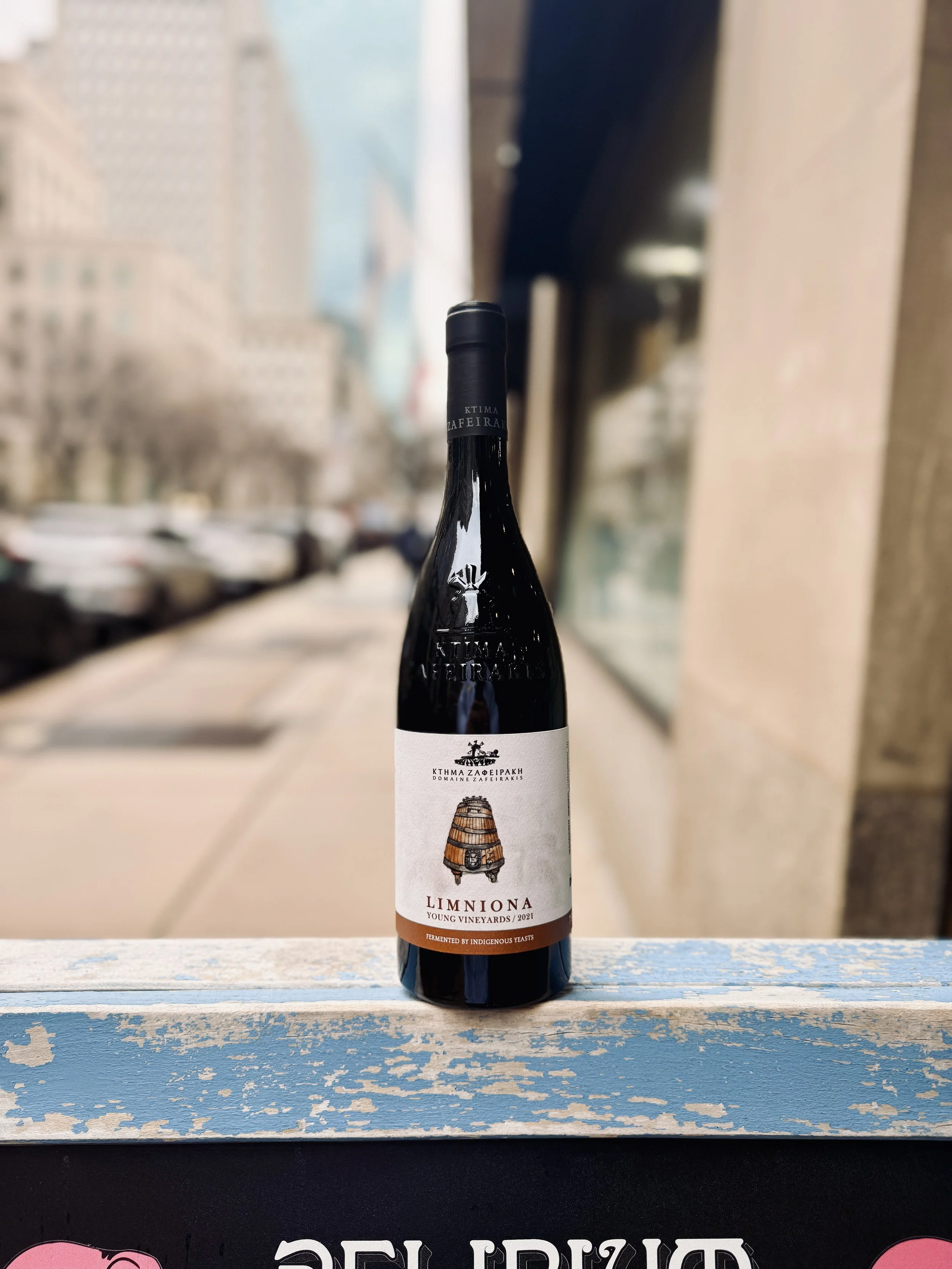
Zafeirakis Young Vines Limonia 2021 — Thessaly, Greece
If Malagousia's rescue was a gradual institutional effort, Limniona's is a more intimate story. This ancient red grape of Thessaly — possibly among the oldest cultivated varieties in Greece — had been reduced to a few elderly vines by the time a winemaker named Anastasios Ligas decided, in the 1990s, that it was worth saving. He located old plantings, propagated them, and eventually got Limniona back into commercial production. Without that single act of stubbornness, the grape almost certainly would have vanished.
What Ligas and, later, Zafeirakis proved is that Limniona is worth the effort. The grape produces a wine that gets compared to Pinot Noir in its structure and texture — medium-bodied, silky, perfumed, with red fruit, real acidity, and the kind of freshness that makes you reach for the glass again before you've quite registered doing it. The Zafeirakis Young Vineyards bottling comes from, as the name suggests, younger vines, and it has all the aromatic clarity and suppleness you'd expect from that — no rough edges, no austerity, just expressive, honest Thessalian red.
If the Malagousia is the approachable entry point into this club, the Limniona is the wine that makes you want to dig deeper.
Pictured: Claude-Emmanuel and Louis-Benoît Desvignes of Louis Claude Desvignes
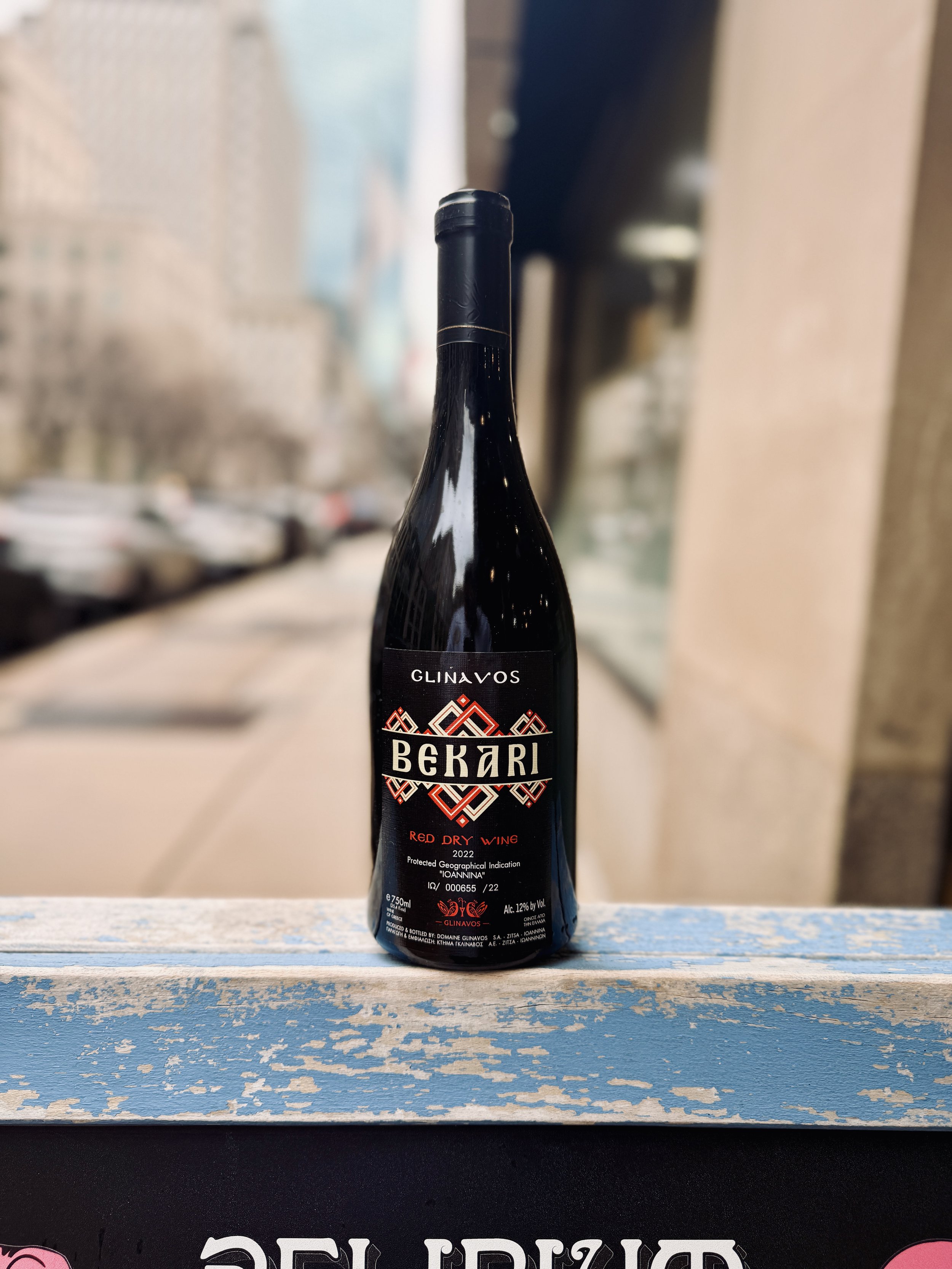
Glinavos Bekari 2022 — Epirus, Greece
The Zitsa PDO sits at 600 to 700 meters in the Pindus mountain range in northwestern Greece, on limestone slopes where the climate runs cold enough that reaching 12.5% alcohol is considered an achievement. This is not the Greece most people picture when they picture Greece. It reads more like the Alps than the Aegean — high, austere, shaped by elevation and cold winters and the kind of terrain that makes farming genuinely difficult.
Lefteris Glinavos founded his estate here in 1978 with a specific purpose: to revive the indigenous red varieties of Epirus, Vlahiko and Bekari, which had been reduced to bit players — blending grapes in Zitsa's traditional sparkling wines — and were in danger of disappearing altogether as a standalone varietal expression. He brought them back. The domaine is now entering a new chapter under his son Thomas, and recently came under the winemaking supervision of Apostolos Thymiopoulos, one of the most respected names in contemporary Greek wine.
Lord Byron stopped in Zitsa in 1809, on his first journey through Greece. He praised the wine, which tells you the tradition here is older than the crisis that nearly ended it.
The Bekari is 100% Bekari grape — the rarer expression, vinified separately from the Vlahiko. It's de-stemmed, fermented in oak vats for twelve days, and bottled dry. The profile is lighter-bodied than the geography might suggest: plum, dark berries, bright acidity, lacy minerality. The limestone and cold nights give it structure without weight. It's a wine that rewards a moment of attention. People lean forward when you explain it, and the wine earns that interest.
Three grapes that almost didn't survive. Three winemakers, across two generations, who decided that was unacceptable.