
 Image 1 of 1
Tuscany, Italy · Sangiovese
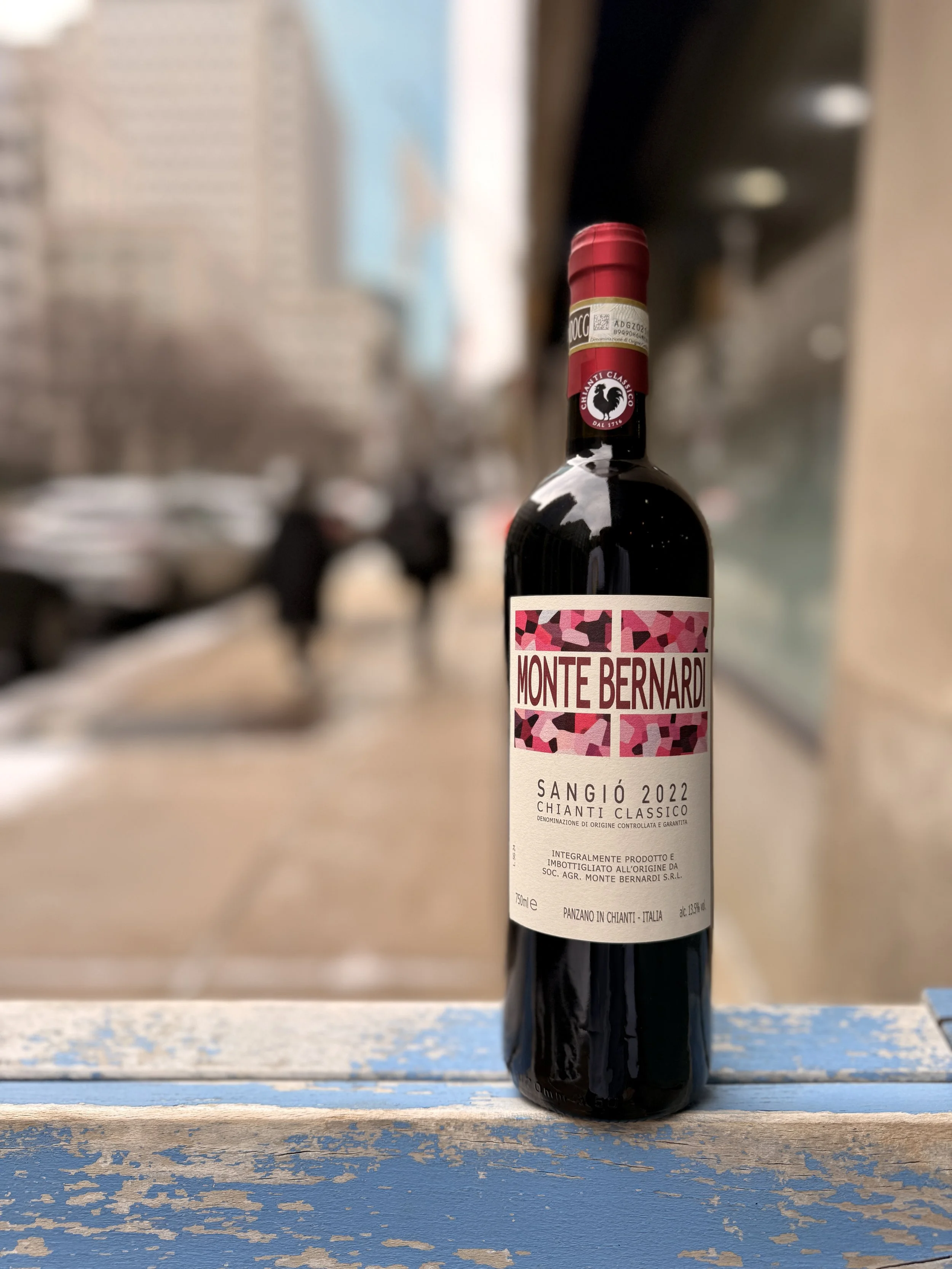
For Monte Bernardi, Sangiovese is not a vehicle for extraction or polish. It is a language—one learned slowly, through years of farming the same hillsides and listening to what the vines offer rather than insisting on what they should become. This is Chianti Classico stripped of rhetoric, grounded instead in slope, soil, and restraint.
The fruit comes from organically farmed vineyards in Panzano, where galestro and alberese soils give the wine its natural line and lift. Fermentations are spontaneous, aging is gentle and unshowy, and oak is used as a resting place rather than a signature. The intent is clarity: to let Sangiovese speak plainly, without interruption.
In the glass, the wine feels poised rather than pushed. Sour cherry, dried herbs, and a touch of iron come first, followed by a quiet savory edge that keeps the fruit honest. The tannins are fine-grained and present with purpose, acidity intact and shaping rather than sharpening the wine.
Tuscany, Italy · Sangiovese
For Monte Bernardi, Sangiovese is not a vehicle for extraction or polish. It is a language—one learned slowly, through years of farming the same hillsides and listening to what the vines offer rather than insisting on what they should become. This is Chianti Classico stripped of rhetoric, grounded instead in slope, soil, and restraint.
The fruit comes from organically farmed vineyards in Panzano, where galestro and alberese soils give the wine its natural line and lift. Fermentations are spontaneous, aging is gentle and unshowy, and oak is used as a resting place rather than a signature. The intent is clarity: to let Sangiovese speak plainly, without interruption.
In the glass, the wine feels poised rather than pushed. Sour cherry, dried herbs, and a touch of iron come first, followed by a quiet savory edge that keeps the fruit honest. The tannins are fine-grained and present with purpose, acidity intact and shaping rather than sharpening the wine.